
Science & STEM
Coxal Bone Quiz: Test Your Hip Bone Anatomy
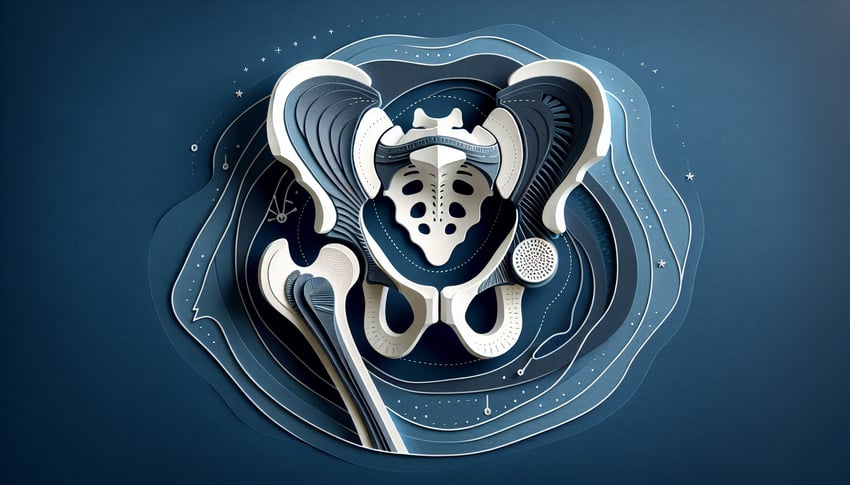
This coxal bone quiz helps you review hip bone anatomy and spot the ilium, ischium, pubis, and key landmarks. Work through 20 quick questions with instant feedback to build speed before a test or lab. For more practice, try our pelvic girdle labeling quiz, check the bone landmarks quiz, or review the lower limb bones quiz.
Take the Quiz
1Which three bones fuse to form the coxal bone?
2What is the socket of the hip joint called?
3Which portion of the coxal bone forms the broad, upper part of the pelvis?
4What is the joint between the two pubic bones called?
5Which part of the coxal bone is most involved in weight-bearing when sitting?
6What is the name of the large concave surface on the ilium that serves as a major muscle attachment site?
7Which bony prominence on the ilium serves as an important landmark for the attachment of the sartorius muscle?
8Which of the following best describes the primary fun<wbr>ction of the acetabulum?
9Which landmark on the coxal bone is a key attachment point for the inguinal ligament?
10Which part of the coxal bone contributes most significantly to the formation of the lateral wall of the pelvic cavity?
11The ischial spine is an important landmark used to assess which of these features?
12What does the pectineal line, found on the superior pubic ramus, provide?
13Which structure of the coxal bone forms a significant part of the acetabular rim?
14The ischial tuberosity is primarily known as the attachment site for which muscle group?
15Which part of the coxal bone articulates with the sacrum to form the sacroiliac joint?
16How does the acetabulum's design enhance the hip joint's stability during dynamic movements?
17What clinical complication could arise from a fracture involving the ilium portion of the coxal bone near the acetabulum?
18In terms of biomechanical fun<wbr>ction, how do the ilium and ischium differ in supporting body weight during locomotion?
19How can variations in the morphology of the coxal bone affect pelvic dimensions relevant to childbirth?
20How might developmental disorders impact the formation and structural integrity of the coxal bone?
Learning Goals
Study Outcomes
- Identify key anatomical landmarks of the coxal bone.
- Label major regions of the hip bone on diagrams.
- Understand the structural relationships between coxal bone features.
- Analyze the functional significance of coxal bone landmarks in hip movement.
- Apply anatomical knowledge to answer quiz questions effectively.
Study Guide
Coxal Bone Quiz - Anatomy Review Cheat Sheet
- Coxal Bone Fusion - The coxal bone, or hip bone, is actually three bones (ilium, ischium, pubis) elegantly fused together at the acetabulum. This fusion creates a sturdy basin for the hip joint, letting you kick, run, and dance. kenhub hip bone Kenhub Article
- Ilium & Iliac Crest - The ilium is the largest part of the hip bone, crowned by the iliac crest, which you can feel just under your hands when you place them on your waist. It serves as an anchor for core and thigh muscles, making it a hotspot for strength and stability. getbodysmart hip bone intro GetBodySmart Overview
- Ischium & Ischial Tuberosity - The ischium makes up the lower back portion of the hip bone, featuring the ischial tuberosity ("sit bone") that bears your weight when you park yourself on a chair. It also anchors your powerful hamstring muscles for sprinting and leaping. kenhub hip bone Kenhub Article
- Pubis & Pubic Symphysis - The pubis is the front piece of the hip bone, meeting its partner at the pubic symphysis - a slightly movable joint cushioned by cartilage. This gives just enough flexibility to help you walk smoothly and absorb shocks. getbodysmart hip bone intro GetBodySmart Overview
- Acetabulum Socket - The acetabulum is the deep, cup-shaped socket where the head of the femur nests, forming the classic ball-and-socket hip joint. Its snug fit provides both stability for weight-bearing and freedom for a wide range of motion. en.wikipedia acetabulum Wikipedia: Acetabulum
- Obturator Foramen - The obturator foramen is a large opening forged by the ischium and pubis, creating a gateway for nerves and vessels to travel into your legs. A thin membrane covers most of it, making this passage super-efficient yet protected. kenhub hip bone Kenhub Article
- Greater Sciatic Notch - Nestled between the ilium and ischium, the greater sciatic notch transforms into a foramen by ligaments, letting the sciatic nerve - the body's longest nerve - glide down to your thigh. It's a key corridor for nerve traffic control. getbodysmart hip bone intro GetBodySmart Overview
- Ischiofemoral Ligament - This strong band wraps around the back of the hip joint, limiting excessive internal rotation and adduction when your hip is flexed. It's one of the superheroes keeping your hip from over-rotating. en.wikipedia ischiofemoral ligament Wikipedia: Ischiofemoral Ligament
- Iliac Crest Landmark - Stretching from the anterior to posterior superior iliac spines, the iliac crest is a prime real estate for muscle attachments - from your abs to lower back. It's also a go-to surface landmark for clinicians and bodybuilders alike. getbodysmart hip bone intro GetBodySmart Overview
- Ischial Spine - The ischial spine is a sharp projection from the ischium, acting as a pulley point for the sacrospinous ligament. You'll find it sandwiched between the greater and lesser sciatic notches. kenhub hip bone Kenhub Article
Explore More
Science Quizzes
AI-DraftedHuman-Reviewed
Reviewed by
Updated Feb 23, 2026